

If you are having trouble with this link, please click here to see the page.


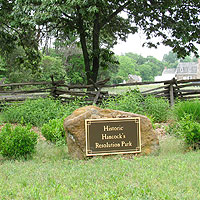
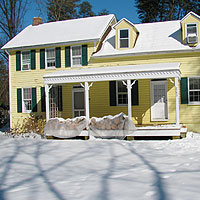
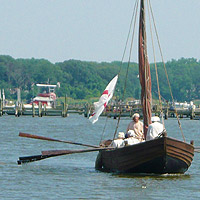
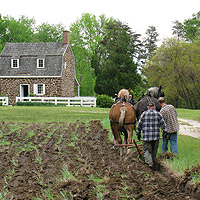
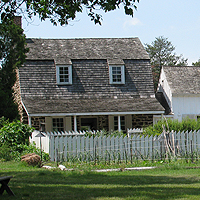
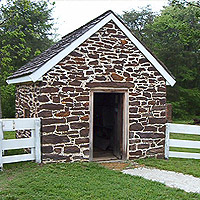
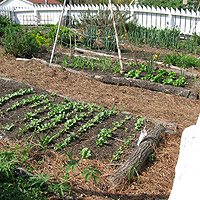
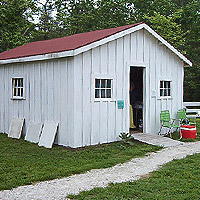
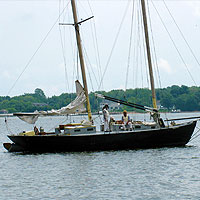
The original stone buildings, built circa 1785, are excellent examples of early Chesapeake architecture and one of the few existing stone buildings of that period in Anne Arundel County. For over 150 years, this was one of many farms that used Maryland's waterways to transport produce to Baltimore and other ports. Occupied by the Hancocks until 1962, it is an Historic Park in the Anne Arundel Park System, operated by the Friends of Hancock's Resolution (FOHR). The old farmstead has five major historic themes: 1- Daily life on a pre-civil war Chesapeake " middling plantation", 1780-1860; 2- Commerce and Transportationon the Chesapeake Bay in that period; 3- Military and Maritime Life on the Chesapeake Bay focused on the War of 1812; 4- American Indian Lifeways on the northeastern Chesapeake Bay (archaeology has turned up a 3,000 year old campsite on the property); and, 5- Capt. John Smith's visiting Bodkin Creek in 1608 on at least one occasion.

If you want to see how average Americans lived before the industrial age, this is the place to visit.


Why do I feel that Hancock’s Resolution is a national treasure?

I ask you to name the number of 18th century, middle class dwellings that would fit the following criteria:
1. They remain virtually unchanged from the 18th century.
2. They remain on their original sites.
3. They are still in a view shed which allows one to view the past
without numerous modern intrusions.
4. They still are on 18th century “middling-sort” farmsteads.
5. They are open to the public.

Read a letter from William L. Brown • Curator, Historian, National Park Service • Harpers Ferry Interpretation and Exhibit Design Center